Cannes 2026: India Walked In Wearing Its Own Story
The 79th Cannes Film Festival drew to a close this week, running from 12 to 23 May 2026 on the French Riviera. As the lights came down on the Croisette, one storyline stood out for anyone watching from India: the most talked-about looks were not borrowed from European fashion houses. They were Indian, made by Indian hands, and worn with intent.
For years, the Indian presence at Cannes was measured by which global luxury label a Bollywood star chose to wear. In 2026, that calculus visibly shifted. Across the festival, Indian attendees leaned into homegrown designers, traditional silhouettes, handloom-inspired textiles and culturally rooted looks that said something about who they are rather than which trend was peaking that season.
The saree had its global moment
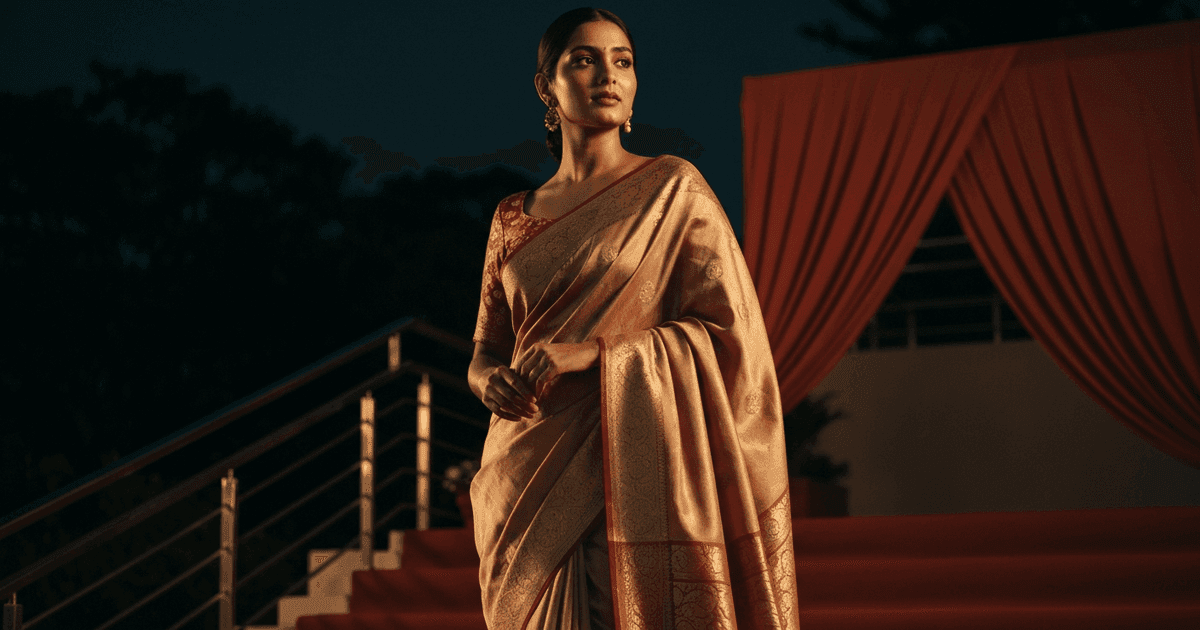
If one garment defined India's red carpet this year, it was the saree. Actresses including Diana Penty, Huma Qureshi and Aditi Rao Hydari were widely praised for bringing the drape to the world's most photographed staircase. Huma Qureshi wore Shanti Banaras, a label known for celebrating Indian weaves and traditional artistry, while Nivedita Saraf turned heads in a Nauvari saree, a silhouette steeped in Maharashtrian identity, striking precisely because of its simplicity and cultural weight.
What made these moments resonate was not novelty. The saree is not new. What was new was the confidence to present it as the headline act on a stage that has historically rewarded Western couture, and to have the global fashion press receive it as elegance rather than as costume.
The red carpet stopped being a place to borrow someone else's glamour, and became a place to broadcast your own.
From luxury logos to craft and credit
The deeper shift sits beneath the hemlines. Fashion at Cannes is no longer only about being seen in a recognisable luxury brand. Increasingly, Indian attendees used their few seconds in front of the cameras to spotlight artisans, handloom traditions and specific regional crafts, zardozi, mirror work, Banarasi weaving, and to name the makers behind them. Heritage and craftsmanship became the story, not the backdrop.
This matters for the business of fashion. When a globally photographed look credits an Indian weaver or a homegrown couture house, it converts soft cultural pride into hard commercial visibility. It tells international buyers, casting directors and brands that Indian craft is not a niche, it is a premium, exportable language of luxury in its own right.
Representation widened well beyond Bollywood
Equally significant was who got to tell that story. India's footprint at Cannes 2026 stretched far past the usual film stars. Digital creators, designers, performance artists and personalities from Marathi, Punjabi, Assamese and South Indian industries all found space on the global carpet, with fashion serving as their passport. Names such as Nidhi Kumar and Ishita Mangal made debuts that drew attention precisely because they did not arrive through the traditional Bollywood route.
For a generation of aspiring models and faces in India, that is the real headline. The gateway to a global moment is no longer guarded by a single industry or a single city. A distinctive look, a clear point of view, and the right styling can now travel, and the audiences watching are international.
What it signals for India's fashion industry
Read together, these threads point to a maturing market. India is increasingly comfortable exporting its own aesthetic rather than importing one wholesale. Designers who build their identity around weaves, regional craft and contemporary tailoring are finding that the world is ready to look. And the faces who carry that work, on a red carpet, a runway, or a campaign, are part of how the message lands.
That is the same conviction we hold at AGMODELS: that the strength of India's fashion moment lies in pairing serious craft with the right faces to present it, on a stage that is now unmistakably global. You can see how we think about that work across our models and in the rest of the journal.
Cannes 2026 has ended, but the signal it sent will outlast the festival. The next time India steps onto a global stage, at a fashion week, a campaign launch, or another red carpet, the question will no longer be whose label to borrow. It will be whose story to tell. And that is a far more powerful place for an industry to stand.