Every City a Runway: India's First Travel Fashion Reality Show and the New Map of Discovery
For most of its modern history, the road into Indian modelling has run through a handful of postcodes. A portfolio shot in Mumbai or Delhi, a casting call in a studio off Andheri or Mehrauli, a scout's eye at a metro fashion week. The map was small, and the gatekeepers few. That map is quietly being redrawn, and the latest sign of it arrived in Mumbai in late June with the unveiling of The Glamour Runway 2026, billed by its producers as India's first travel fashion reality show.
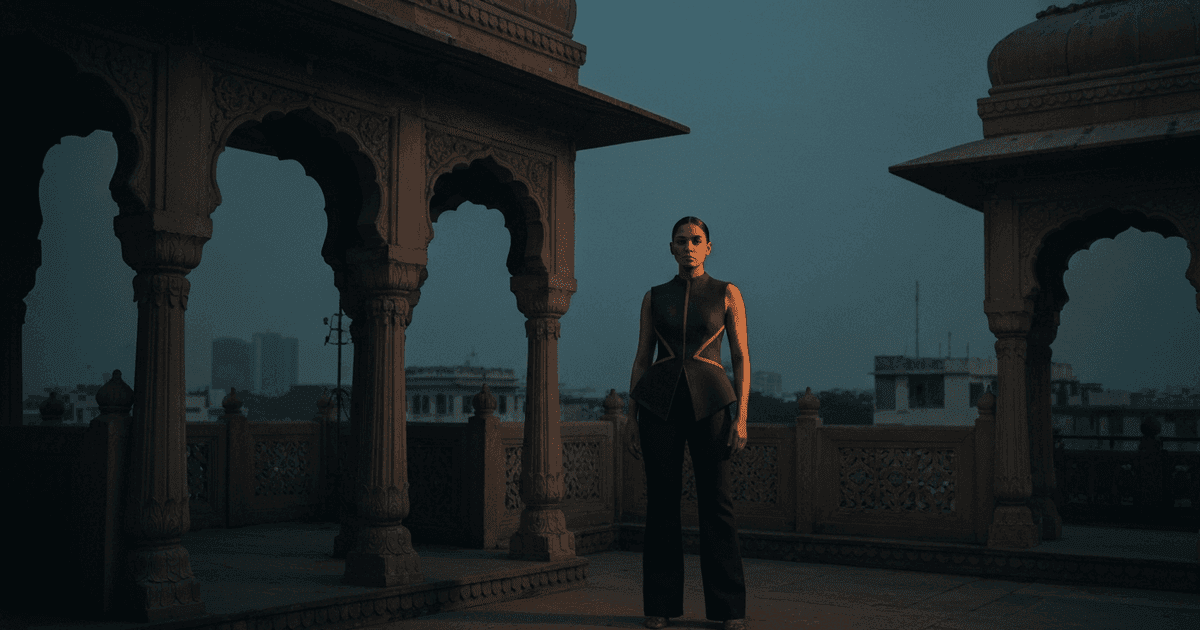
The premise is deceptively simple and, for aspiring talent, quietly radical. Rather than confine the competition to a single soundstage, the show turns the country itself into the runway. Contestants will move across ten Indian cities, with each destination setting its own brief drawn from local heritage, architecture, lifestyle and craft. The inaugural season is mapped through Mumbai, Delhi NCR, Bengaluru, Goa, Jaipur, Lucknow, Indore, Chennai, Hyderabad and Patna, before reaching beyond India's borders to Nepal, Sri Lanka and Thailand. The result, on paper, is less a beauty pageant and more a moving editorial, where the backdrop changes with every challenge.
Beyond the metro casting call
What makes the format worth a model's attention is not the television gloss but the geography. A show that plants a stage in Lucknow, Indore and Patna is, by design, looking for faces and personalities that the conventional Mumbai-Delhi circuit rarely sees. For years, the talent pipeline in India has been narrowing in exactly the wrong way: enormous ambition in tier-two and tier-three cities, but very few formal routes for it to be discovered. A travelling competition flips that logic, carrying the audition to the contestant rather than the other way around.
It also reflects a broader truth about how careers now begin. The age of the single discovery moment has given way to something more continuous and content-driven. A young model today is as likely to be spotted through a reel as a runway, and a format built around destination storytelling, social activations and city-specific challenges is engineered for precisely that world. The skills it rewards, comfort on camera, adaptability, a point of view, are the same ones that increasingly decide who books the campaign once the cameras stop rolling.
The Glamour Runway 2026 is not just another reality show; it is a platform that celebrates India's fashion, culture, travel, and talent on a national stage. Every city has its own story, and through this journey we aim to showcase those stories while creating meaningful opportunities for aspiring talent.
Those words belong to Akash Shukla, who is producing the property with Vishal Pandey under the Zomex Digital banner. The launch evening in Mumbai gathered designers, choreographers, digital creators and television personalities, among them couturier Archana Kochhar, a signal that the venture wants to be read as a fashion event first and a reality format second.
An old idea, an Indian accent
Televised model searches are not new, and that is part of the point. Around the world, screen-based competitions have long served as an on-ramp for talent without industry connections, turning unknowns into working professionals and, occasionally, household names. What is new is the Indian accent being placed on the genre. By fusing the model search with travel and heritage, The Glamour Runway 2026 borrows a proven global template and bends it toward something distinctly local, a celebration of the country's regional craft traditions and the diversity of its faces, rather than a single, imported ideal of beauty.
There is a healthy scepticism worth keeping, too. A launch event is a promise, not a track record, and the value of any such platform will be measured by what happens to its contestants afterward, whether they convert visibility into representation, bookings and durable careers, or simply a season of airtime. Reality formats can open a door; they cannot walk through it for you. The work of building a portfolio, learning to move, understanding a brief and earning a client's trust still belongs to the model.
What it means for India's next faces
Still, the direction of travel is encouraging. India's fashion economy has spent the past two years widening, more international campaigns shooting here, more Indian designers showing abroad, more luxury houses betting on the market. A discovery format that scouts beyond the metros fits neatly into that expansion, and it lowers the first, hardest barrier for anyone outside the established circuit: simply being seen.
For the agencies that turn raw potential into working talent, the implication is clear. The next wave of faces will come from a wider map than ever before, and the job of spotting, shaping and representing them now reaches well past the familiar few square kilometres of Mumbai and Delhi. That is a good problem to have. At AGMODELS, where international talent and Indian opportunity already meet daily, a country that turns every city into a runway is precisely the kind of country worth scouting in. The map just got bigger; the next generation will be the ones to fill it in.