Menswear's New Map: India Steps Into the Frame as Men's Fashion Month Opens
This week, the fashion world's attention turns to the men's collections. Milan's menswear shows for Spring/Summer 2027 run from June 19 to 23, before the spotlight shifts to Paris, where the men's calendar unfolds from June 23 to 28 with roughly 74 houses presenting across some 36 runway shows and 38 presentations. It is the industry's twice-yearly referendum on where menswear is heading, and for the first time in a long while, part of that conversation is being written from India.
A New Delhi label on the Paris calendar
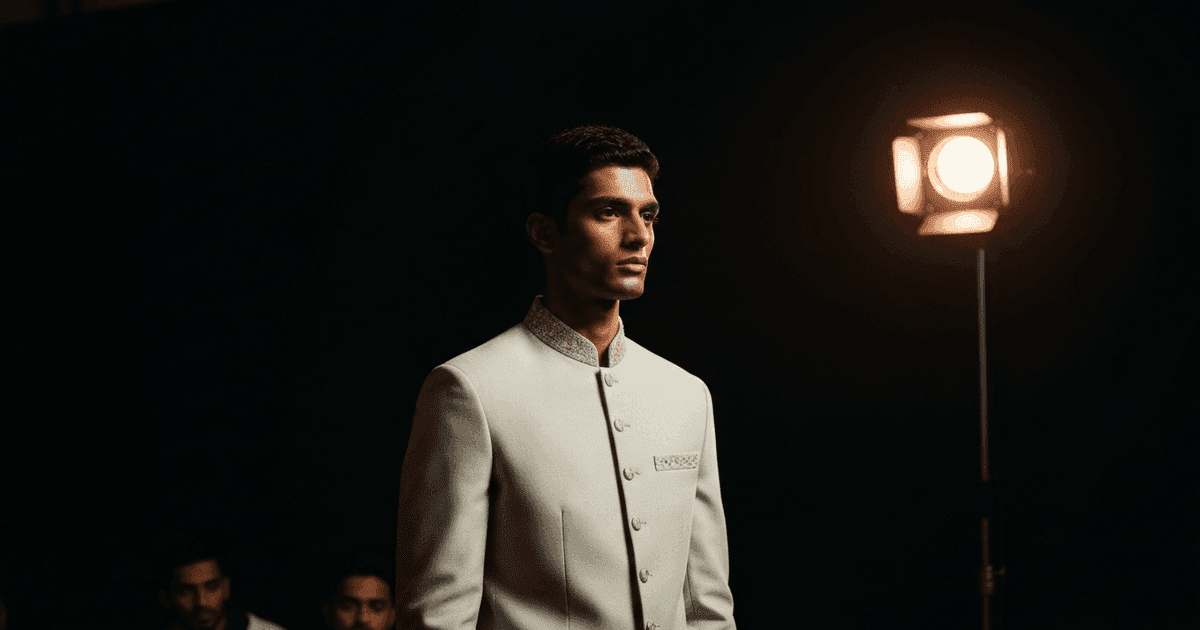
The clearest marker of the shift is Kartik Research. Founded in 2021 by Kartik Kumra while he was still a university student, the New Delhi label became the first Indian menswear brand to earn a place on the official Paris men's calendar, a distinction that, only a few seasons ago, would have read as improbable. The house builds its collections around more than sixty artisan clusters across the country, translating ancestral craft into clothes that speak fluently to a global audience. In 2023, it was named a finalist for the LVMH Prize, fashion's most closely watched award for emerging talent.
What makes Kartik Research significant is not novelty but credibility. For years, India's presence in international fashion arrived as a cameo, a celebrity in couture on a red carpet, a single look in a lookbook, a guest appearance that flattered without sticking. A label holding its own on the Paris schedule, season after season, is something different. It is the difference between being invited and belonging.
The craft economy behind the moment
India's menswear ascent is built on more than one designer's ambition. The country's textile and apparel industry is on track toward a market of roughly $190 billion, and India remains among the world's largest apparel exporters, with ready-made garments leading recent export growth. Beneath those figures sits something harder to quantify: the embroidery houses of Mumbai, Kolkata and Lucknow whose hands quietly finish garments for some of the most storied maisons in Paris and Milan.
That craft heritage has long been India's gift to global fashion, usually uncredited. The story of 2026 is the slow reversal of that anonymity. Designers including Rahul Mishra, Vaishali S and Gaurav Gupta have carried Indian craftsmanship onto the Paris Haute Couture schedule under their own names, using international fashion weeks and editorial placements to claim space among the buyers, stylists and editors who set the agenda.
The most valuable thing India brings to the global runway is not novelty. It is depth, generations of weaving, embroidery and tailoring that cannot be manufactured anywhere else.
What it means for the people on the runway
For models, this matters in concrete ways. A widening calendar means a widening casting pool. As Indian houses and India-connected labels grow their international footprint, the demand grows for faces who can carry that story, talent fluent in both the heritage and the global commercial language that brands now expect. The same forces drawing designers to Paris are reshaping the campaigns and runways closer to home, where international agencies and Indian clients increasingly want models who can move credibly between editorial, couture and commercial work.
It is a useful reminder for anyone building a career in this industry: the runway is no longer a single destination but a network. A booking in Mumbai and a campaign in Milan are no longer separate worlds, and the talent who understand that early are the ones who will define the next decade. You can see how that range plays out across our own roster of models, where versatility is the through-line.
The frame is still being drawn
Men's fashion month will end, as it always does, with a flurry of reviews and a new set of names to watch. But the larger story is structural, not seasonal. India is no longer waiting to be discovered by global fashion; it is arriving on its own terms, with its craft, its designers, and increasingly its faces. For an industry built in Mumbai and looking outward, that is not a trend to follow. It is the ground we are standing on. Follow more of these shifts on the Insider, and watch this space, the most interesting chapters are still being written.