When the Karigar Took the Bow at India Couture Week 2026
India Couture Week 2026 wrapped in New Delhi on July 29, and the story of the week was not a single dress or a single face. It was the hands behind them. The Fashion Design Council of India ran the couture calendar from July 23 to July 29, and across the shows one word kept surfacing: craft.
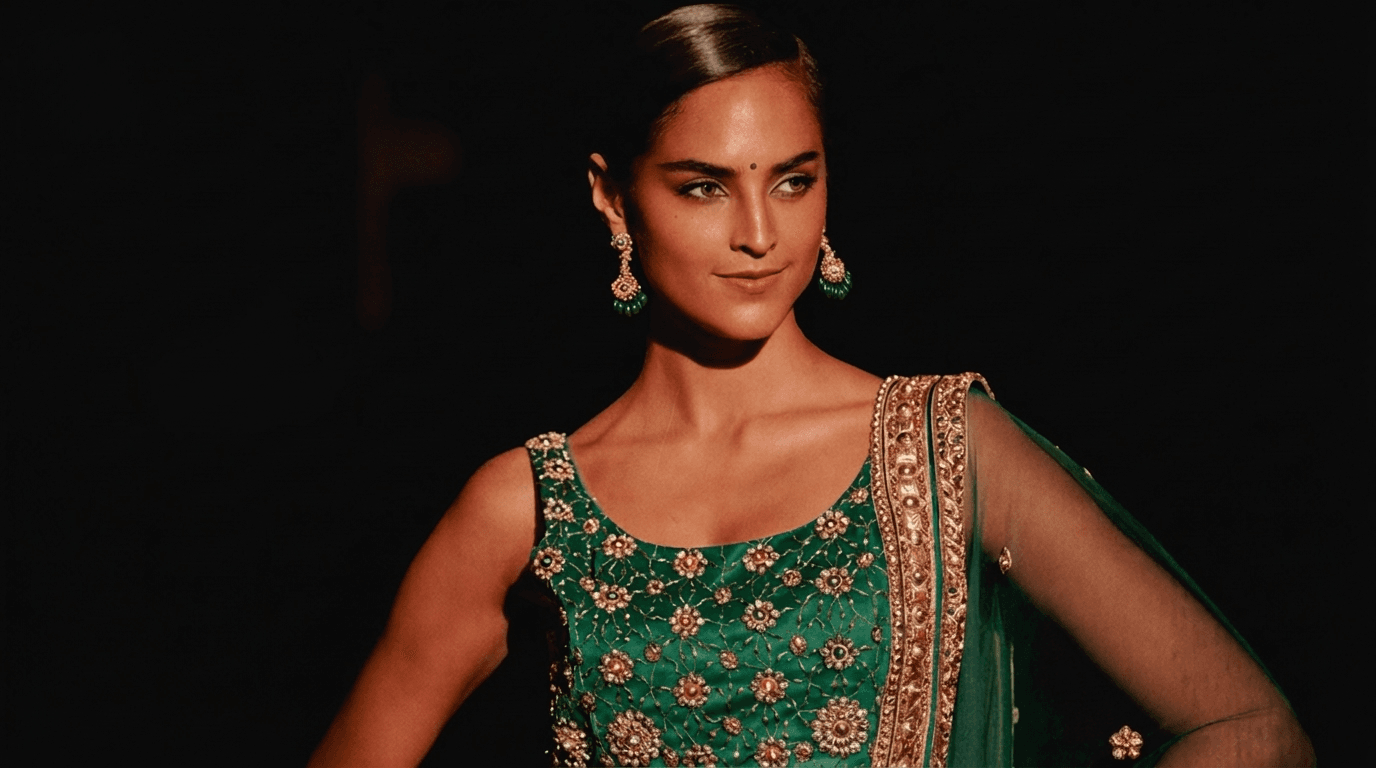
The clearest statement came at the start. The House of Rohit Bal presented at the Taj Palace with a collection titled DASTKAR, a word that simply means handiwork. Rather than build the show around a muse or a celebrity, the house pointed the light at its karigars, the embroiderers, weavers, dyers and pattern makers who have worked with the label for more than three decades. The collection drew on French tapestries, vintage wallpaper patterns and the lotus, peacock and chinar motifs long associated with the late designer, rendered in silk, velvet and dense hand embroidery.
Craft as the headline, not the footnote
For years the language around couture week has centered on the designer and the front row. DASTKAR changed that order. When a house names its collection after the people who stitch it, the runway stops being a parade of clothes and becomes a display of labour that usually stays out of sight. That shift matters for anyone who works in this industry, and it matters most for the models who carry the work down the runway.
Consider what a fully hand embroidered couture piece actually asks of a model. These garments are heavy. A single lehenga can hold weeks of surface work and weigh several kilograms. The embroidery does not fall the way jersey or crepe falls, so the walk has to change. A model holds the shoulders square so a shawl reads correctly, slows the pace so beadwork catches the light, and keeps the face calm while the body manages the load. None of that shows up in a casting photograph. It shows up in the fitting room and on the runway, and it is the skill that separates a booked model from a remembered one.
The finale that pointed outward
The week closed on July 29 with Rahul Mishra, and the choice was deliberate. Mishra is the Indian designer with the widest international reach right now. He shows on the official Paris haute couture calendar, he has won the International Woolmark Prize, and his studio's slow process of hand weaving and embroidery supports the livelihoods of more than a thousand artisans. Handing him the closing slot placed Indian craft at the front of a global conversation rather than a local one.
When a house names its collection after the people who make it, the model's job quietly changes. She is no longer wearing an outfit. She is carrying someone's months of work, and the room can tell the difference.
That international framing is the part aspiring models in India should read closely. A designer who moves between New Delhi and Paris books talent who can work in both rooms, and the standards travel with him. Posture, fitting discipline, the ability to take direction in a tight backstage schedule, the patience to stand still for a final adjustment, these are the same in a Delhi couture show and a Paris presentation. A career built on that base is not tied to one city.
What craft-led couture rewards
There is a practical lesson in a week that put artisans first. The models who do well in couture are rarely the ones with the loudest social following. They are the ones designers trust to protect the clothes. That trust is built in small ways: arriving early, learning the choreography, respecting the karigar who spent a month on the panel you are about to wear, and treating a couture fitting as a collaboration rather than a photo opportunity.
For newer faces, the takeaway is encouraging. Couture rewards discipline you can actually build. You cannot manufacture height or bone structure, but you can learn to walk in weight, to hold a line, and to treat a garment as the work of many hands. Our own roster is chosen with that belief in mind, and the pieces in our journal keep returning to it, because it is the part of the job that lasts.
India Couture Week 2026 made a quiet argument that the future of Indian fashion runs through its workshops, not around them. If the karigar is moving to the centre of the story, the model standing beside the work has a clear role to play. The next generation that understands this, the ones who treat every fitting as a chance to honour the craft, will be the faces designers ask for by name.