The Pop-Up Economy: India's Retail Space Crunch Is Quietly Rewriting the Model's Job
India's luxury market has run into a problem that looks, at first, like a compliment. There is more demand for premium retail space than there is premium retail space to give.
Cushman and Wakefield's second quarter data for 2026 puts Grade A mall vacancy across India's top markets at 5.0 percent, down from 5.7 percent in the first quarter, with no new supply delivered for two consecutive quarters. In the Grade A+ centres, the addresses that actually house luxury, vacancy sat at 2.6 percent earlier this year. A pipeline of roughly 12.7 million square feet is scheduled between 2026 and 2028, but only about 1.6 million square feet of it arrives in the second half of this year, and Delhi NCR accounts for more than half of what is coming.
Translated out of real estate language: a brand that decides today it wants a flagship in Mumbai or Delhi may be waiting years for a door. Prada, to take the most cited example, still has no fashion store in the country.
So the brands stopped waiting
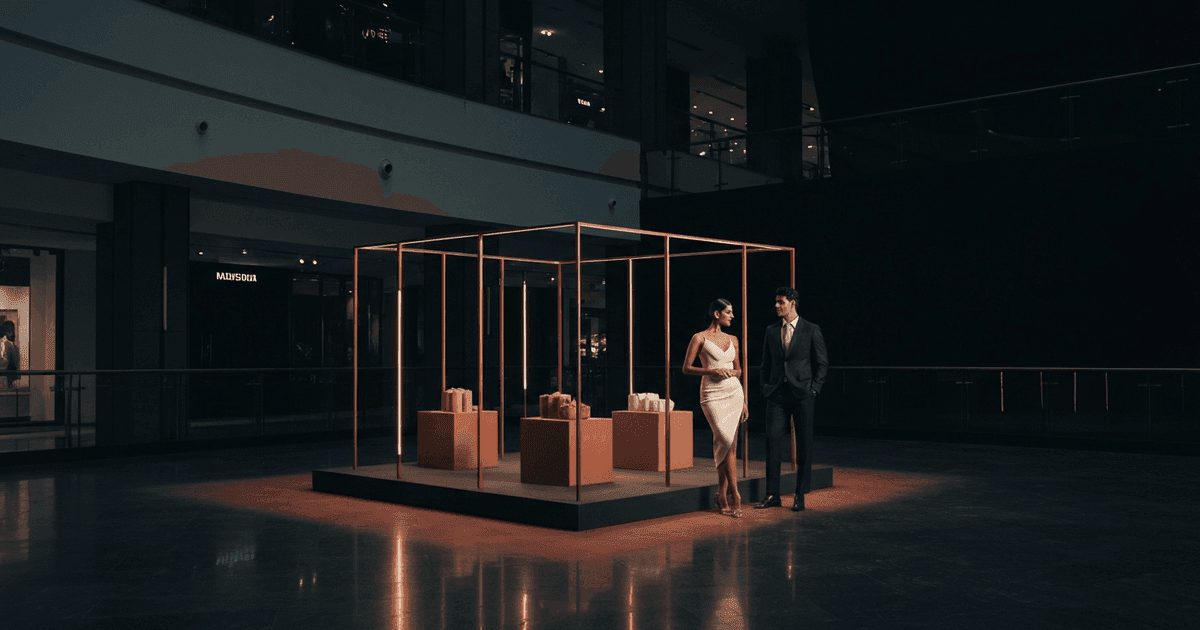
Rather than sit on a waiting list, luxury houses have started building temporary rooms instead of permanent ones. Writing in The Hans India on 12 July, brand marketing professional and NIFT visiting faculty Usha Kumari described kiosk and pop-up retail as the sector's working strategy in India: short leases, experimental catchment areas, minimal inventory, maximum atmosphere. Scarcity, she noted, is something luxury has always known how to sell.
The evidence is already on the ground. Fenty Beauty entered Mumbai through a pop-up at Phoenix Palladium styled as Fenty Beauty Ki Haveli. Tory Burch took over Roastery Coffee House in Sarvodaya Enclave for The Romy Cafe, a limited run built entirely around one handbag, complete with custom table settings, a live illustrator, a mirrored photo installation and a DJ. Longines opened at Inorbit Mall in Hyderabad with a ramp presentation for its PrimaLuna collection. TOM FORD, Judith Leiber Couture and Jacob and Co. have all taken permanent addresses in Delhi, but even those launches were staged as events rather than openings.
The store is no longer just a place where product sits. It is a set, a stage and a content studio operating in the same square footage, usually for a fortnight.
What this means for models
Every one of those formats needs faces, and not the same way a campaign shoot needs them.
A billboard needs one image. A three week activation needs someone who can hold a room across fifteen consecutive afternoons: greeting clients, demonstrating a product, appearing in the day's vertical video, walking a short presentation, then doing it again tomorrow for a different guest list. The work is closer to hospitality than to editorial, and it rewards a completely different set of instincts. Stillness in front of a camera matters less than warmth in front of a stranger.
It also compresses the timeline. Runway seasons and campaign cycles are planned months ahead. A pop-up with a three week lease is cast in days, often in a city the brand is testing for the first time. That favours talent who are visa ready, locally available, comfortable in more than one language, and reachable through an agency that can confirm within hours rather than weeks.
And it changes the geography. Multi brand formats like The Collective and Galeries Lafayette have made it easier for brands to reach Indian shoppers without owning a door, and the same logic points toward tier two cities where operating costs are lower. Bengaluru, Hyderabad, Pune and Ahmedabad are no longer places a brand visits after Mumbai and Delhi. Increasingly they are where a brand finds out whether it has a market at all.
The quieter opportunity
There is a version of this story where the space crunch reads as bad news, a market held back by construction schedules. For anyone building a modelling career in India, the opposite is closer to true. A permanent flagship generates one launch. A pop up strategy generates a rolling calendar of them, each with its own casting, each needing presence rather than just a portfolio.
The models who benefit will not necessarily be the ones with the strongest runway credits. They will be the ones who treat a fortnight in a mall atrium with the same seriousness they would bring to a couture fitting, and who understand that the client watching them is often standing three feet away rather than sitting behind a monitor.
At AGMODELS we have watched this shift arrive booking by booking, in briefs that ask less about tearsheets and more about availability, language and how someone holds a room. It is a slower kind of visibility than a fashion week, and for many careers it is the more durable one. You can see the faces we represent on our models page, and more of our reporting on India's changing market in The Insider.
The permanent stores will come. Twelve million square feet is a lot of doors, and by 2028 India's luxury map will look very different from the one brands are working with today. Until then, the industry is running on temporary rooms, and the work is very real.