The Met Writes to Calcutta: Sabyasachi's Museum Partnership Opens a New Door
Museums license their collections all the time. Tote bags, silk scarves, desk calendars in the gift shop. What the Metropolitan Museum of Art announced on August 11 is a different kind of arrangement. The Met has entered a multi-year collaboration with Sabyasachi, and the first chapter is not merchandise. It is high jewellery, conceived, developed and handcrafted in India, debuting at a New York Fashion Week runway presentation on September 15.
For a museum that holds roughly 5,000 years of art, and for an Indian house that built its name on the karigar, the pairing says something specific: Indian craftsmanship is being treated as an interpreter of world history, not a regional flavour of it.
What was announced
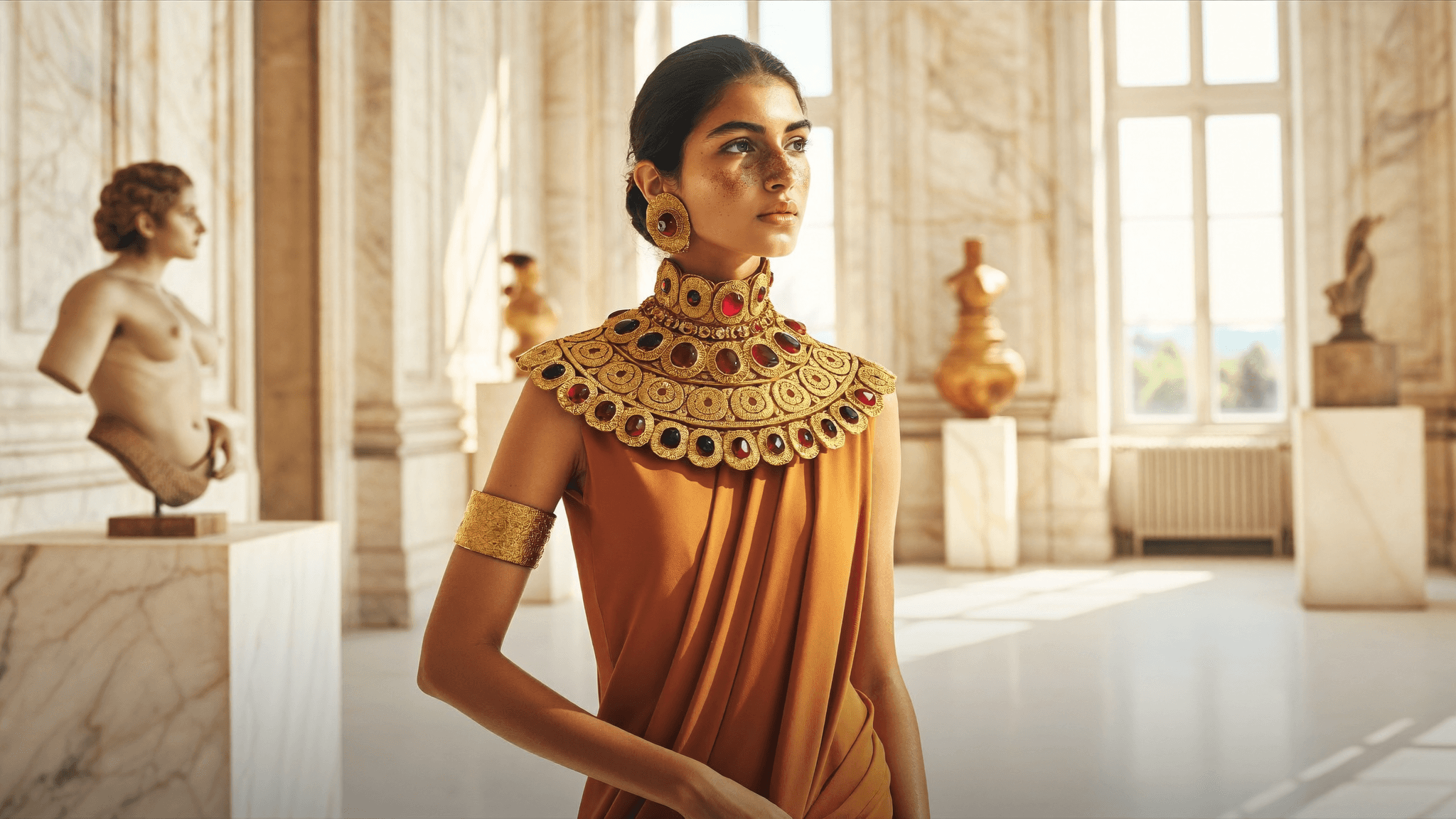
Under the partnership, Sabyasachi Mukherjee will draw on objects across The Met's departments, from Greek and Roman art to Medieval and Islamic holdings, and translate them through the workshops of his Calcutta atelier. The opening collection takes the Byzantine Empire as its subject, the trading civilisation centred on Constantinople that absorbed influences from Egypt, Greece, Rome, Persia and, through the Silk Route, India itself.
The debut is tightly edited. Forbes reports six pieces of high jewellery in the first release. Among the designs described so far: a wrist cuff in 18 and 22 karat gold set with garnet cabochons, drawn from a third-century Roman marble sarcophagus, and a tourmaline and jade tiger-claw necklace inspired by a twelfth-century Byzantine casket. Every piece is made by hand in India by Sabyasachi's network of master artisans.
The collection shows on the NYFW runway on September 15 and then sells through the house's flagship at 160 Christopher Street in New York's West Village, its other global stores, and select retailers. Reports around the announcement indicate later chapters of the collaboration will extend into accessories and clothing.
Why a museum matters more than a brand deal
Fashion houses sign collaborations every week. Museums do not. An institution like The Met lends its name slowly and carefully, because its currency is scholarship, not hype. Stephen Mannello, The Met's head of retail and global licensing, framed the project as a way of letting works from antiquity be seen through a new creative lens.
Mukherjee's own reading of Byzantium is the more telling one. He points to it as a culture built on exchange rather than geography.
"It was shaped by the movement of people, ideas, and craftsmanship across continents," Mukherjee said in the announcement.
He drew a line from Constantinople to his own city, Calcutta, another commercial hub formed by trade. The subtext is hard to miss. India is not being invited into the history of world craft as a newcomer. It is being credited as one of the authors.
That framing matters for everyone who works in the Indian fashion economy, because prestige flows downhill. When the world's most visited art museum builds a multi-year programme around Indian hands, the value of those hands, and of the faces that present their work, moves up with it.
What September 15 means for models
A high jewellery runway presentation is its own discipline. It is not a forty-look ready-to-wear show. The clothes recede, the camera comes close, and the casting brief changes with it. Jewellery shows reward stillness, neck and hand awareness, and faces that hold a tight frame, because the imagery that travels afterwards is mostly close-up. Models who have trained for beauty and fine jewellery campaigns, the kind of detail work Mumbai's commercial market produces in volume, are working from the right toolkit.
The Met association also guarantees a press footprint far beyond the fashion desk. Art press, museum audiences and general news will carry the September 15 images, which means the models in them will be seen by editors and casting directors who never open a fashion week schedule. For Indian and international faces working out of India, this is the kind of show that turns a runway slot into a portfolio anchor.
There is a longer game too. Sabyasachi has spent two decades exporting the karigar story. A museum partnership institutionalises it, and campaigns built on craft narratives have consistently favoured casting that looks like the story: Indian faces, South Asian faces, and international models who carry an editorial stillness rather than a commercial smile. Agencies that develop both lanes, as the Mumbai boards increasingly do, are positioned for exactly this kind of work.
The road through September
September 15 now carries double weight on the NYFW calendar: Sabyasachi's return to the New York runway after two decades, and the first public evidence of what a Met partnership looks like when it is filtered through Indian workshops. The pieces will do the talking, but the structure around them, a corporate house, a museum contract, a global retail plan, shows how far the business of Indian fashion has moved in a single year.
For the models watching from Mumbai, the lesson is practical. The work that reaches the world stage is increasingly built on India's own material, its craft, its history, its ateliers. The closer you are to that pipeline, the closer you are to the shows that matter. The Insider will be watching what walks on September 15, and who walks it.