SKIMS Comes to India, and the Casting Brief Changes With It
On 5 August, Reliance Brands Limited announced an exclusive partnership to bring SKIMS to India, starting with stores in Delhi and Mumbai. The label, co-founded by Kim Kardashian and Jens Grede, will be operated here across physical stores and digital channels, in a phased rollout rather than a single splashy opening. The move follows SKIMS openings in London and Dubai, with Hong Kong and Seoul on the way.
Read as a retail item, it is one more global name signing an India deal. Read from the other side of the camera, it is something more specific. A brand built around bodies, fit and comfort is about to start casting in a market that has spent two decades casting mostly for occasion.
A category that books differently
Indian fashion work has long been organised around a few reliable poles. Bridal and festive. Jewellery. Beauty. Sportswear when a global brand runs a local leg of a campaign. Each of those briefs asks a model to carry a garment, a stone or a story. The face does most of the work, and the body is a hanger for something else.
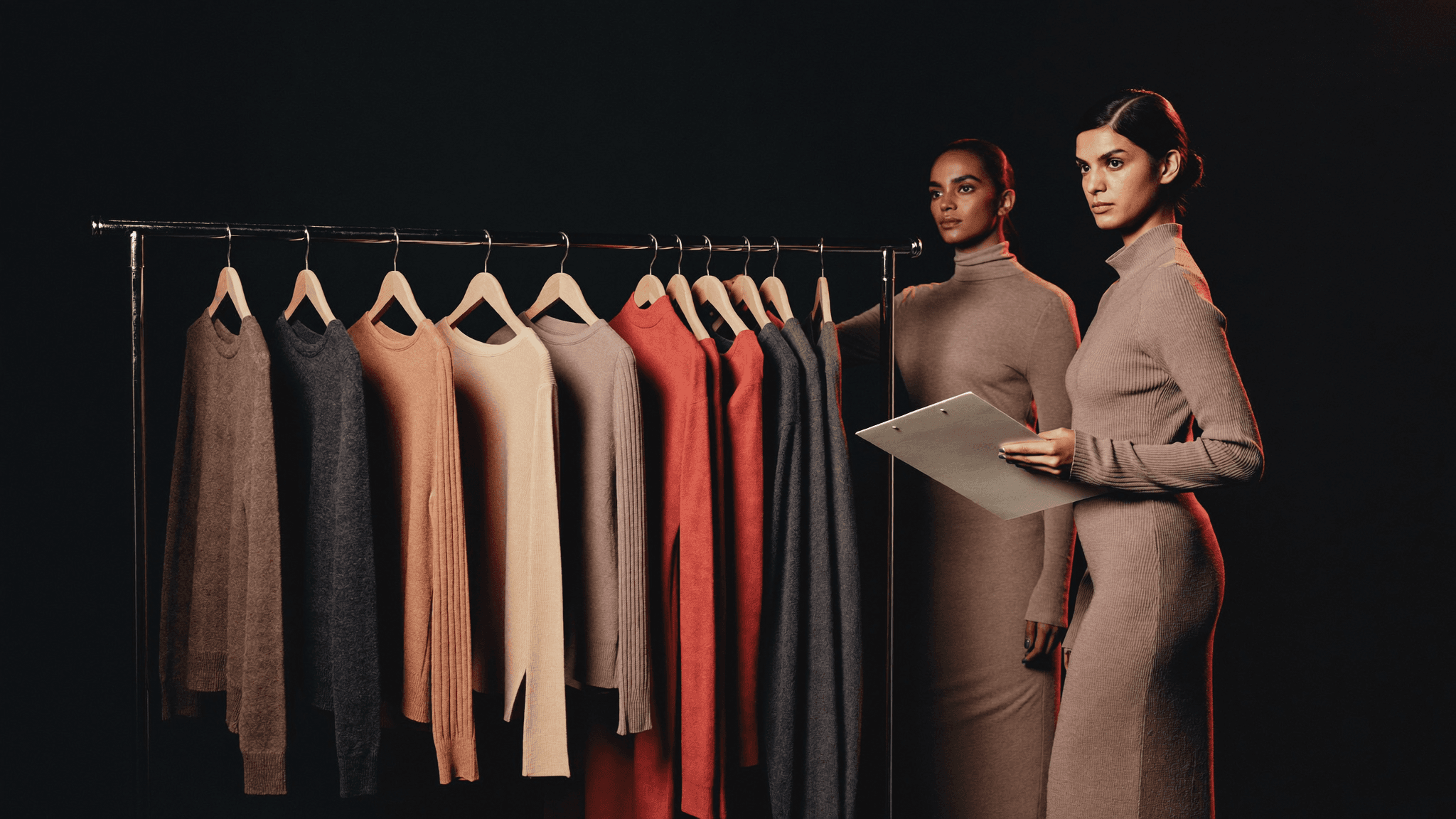
Bodywear inverts that. There is no embroidery to look at and no lehenga to fill the frame. The product is a second skin, so the shoot is about proportion, posture, the way fabric sits over a shoulder blade, the way a seam behaves when someone turns. Casting directors on these jobs are not looking for the most striking face in the room. They are looking for a specific set of measurements, a particular skin undertone under a particular light, and someone who can move in small, controlled increments for six hours.
That is a craft, and it is not the one most Indian portfolios are built to demonstrate. Comp cards here tend to lead with editorial beauty shots. A brand in this category will flip past those and go straight to the measurement sheet.
What size inclusive actually means on a call sheet
SKIMS built its reputation on a wide size and shade range, and Reliance framed the India entry in those terms. Isha Ambani, a director at Reliance Retail Ventures, said in the announcement:
SKIMS has changed how the world thinks about shape, comfort and inclusivity, and it speaks directly to a new generation of Indian consumers who want fashion that is both aspirational and made for them.
Strip the corporate register out of that and a practical consequence remains. If a brand sells across a wide size range, it has to photograph across a wide size range. Every size a customer can buy needs a body wearing it somewhere in the catalogue, and increasingly on the product page itself. That is not a diversity gesture. It is a merchandising requirement.
For models in India, that widens the door in a way runway never has. The frame that gets booked for a Lakmé show is one frame. A bodywear catalogue needs many, and it needs each of them to be professional, punctual and camera-literate. Height stops being the gate. Fit, presence and reliability become the gate instead.
The volume nobody talks about
Runway is the visible part of a modelling career and the smallest part of the income. Two stores in Delhi and Mumbai, plus a digital channel, plus a phased expansion into more cities, adds up to something models rarely get from a single client: repeat work. Seasonal drops, in-store visuals, size-run e-commerce, regional social edits, fit sessions before any of it is shot at all.
Fit work in particular is underrated here. Brands entering a new market need bodies to test on, and the people who do that reliably tend to end up in the campaign. It pays less than a headline shoot and it lasts longer than one. Careers get built in exactly that gap, which is why we keep saying the same thing to the models on our board: take the unglamorous booking that repeats over the glamorous one that does not.
Where the professional line sits
A bodywear category also raises the standard of care a set has to meet. Closed sets. Clear briefs sent before the day, not on it. Written usage terms that say where the images run, in which territories, and for how long. Retouching boundaries agreed in advance. A model should know all of that before undressing for anyone, and none of it is unreasonable to ask.
Global brands generally arrive with these protocols already written, because their home markets require them. The risk is not the brand. The risk is the long tail of local imitators who will chase the same category over the next two years with none of the paperwork. A market that grows this fast tends to grow its grey areas at the same speed.
The wider shift
Industry estimates put India innerwear at roughly 10.9 billion dollars in 2025, with shapewear still a small slice of that and growing faster than the whole. Small and fast is exactly the profile that attracts international capital, and SKIMS is unlikely to be the last name in this category to sign an India deal.
What that means, quietly, is that the Indian model job is broadening past the runway and the bridal set. The next few years of bookings will lean commercial, repeatable and body-literate. It is less romantic than a Paris credit. It is also what pays rent, and it rewards a kind of professionalism the Indian market has not always demanded.
We will keep tracking how this category develops on The Insider. Our read for now is simple. When a brand tells you it sells to every body, believe the merchandising, not the marketing, and get your measurements current.